This Is the Infrastructure Gap That's Killing Your Agents
Here's what's happening right now on Hacker News and in every serious AI engineering channel: teams are shipping capable agents — good reasoning, solid tool use, clean prompts — and watching them fail in production because the infrastructure underneath them is stateless, ephemeral, and amnesiac. The agent forgets everything between sessions. The sandbox gets wiped. The context window overflows and critical state disappears.
This isn't a model problem. This is an infrastructure problem. And it's the reason the gap between "impressive demo" and "production agent" is still enormous in 2026.
If you're building agents seriously, you need to understand persistent sandboxes and agent memory as a first-class infrastructure layer — not an afterthought bolted on after the fact. This piece breaks down why it's blowing up, what the architecture actually looks like, and what you need to build or adopt right now.
Why This Is Trending Now
Three converging forces pushed this to the top of the HN front page and engineering discussions this week:
- Long-horizon tasks are becoming real. Agents are no longer just answering questions — they're executing multi-step workflows over hours or days. A stateless sandbox that resets on every invocation is completely inadequate for a coding agent that needs to remember it already installed a dependency or refactored a module an hour ago.
- The context window ceiling. Even 200K-token context windows don't solve the memory problem — they just delay it. You can't fit a week of agent activity into a prompt. You need external, queryable, structured memory.
- Tooling is finally maturing. E2B, Daytona, Modal, and others are shipping persistent compute sandboxes. Vector databases with agent-native APIs are table stakes. The infrastructure layer is crystallizing, which means practitioners are now actively comparing approaches.
This is the moment to get ahead of the curve — not catch up to it six months from now when your competitors already have it in production.
What "Persistent Sandbox" Actually Means
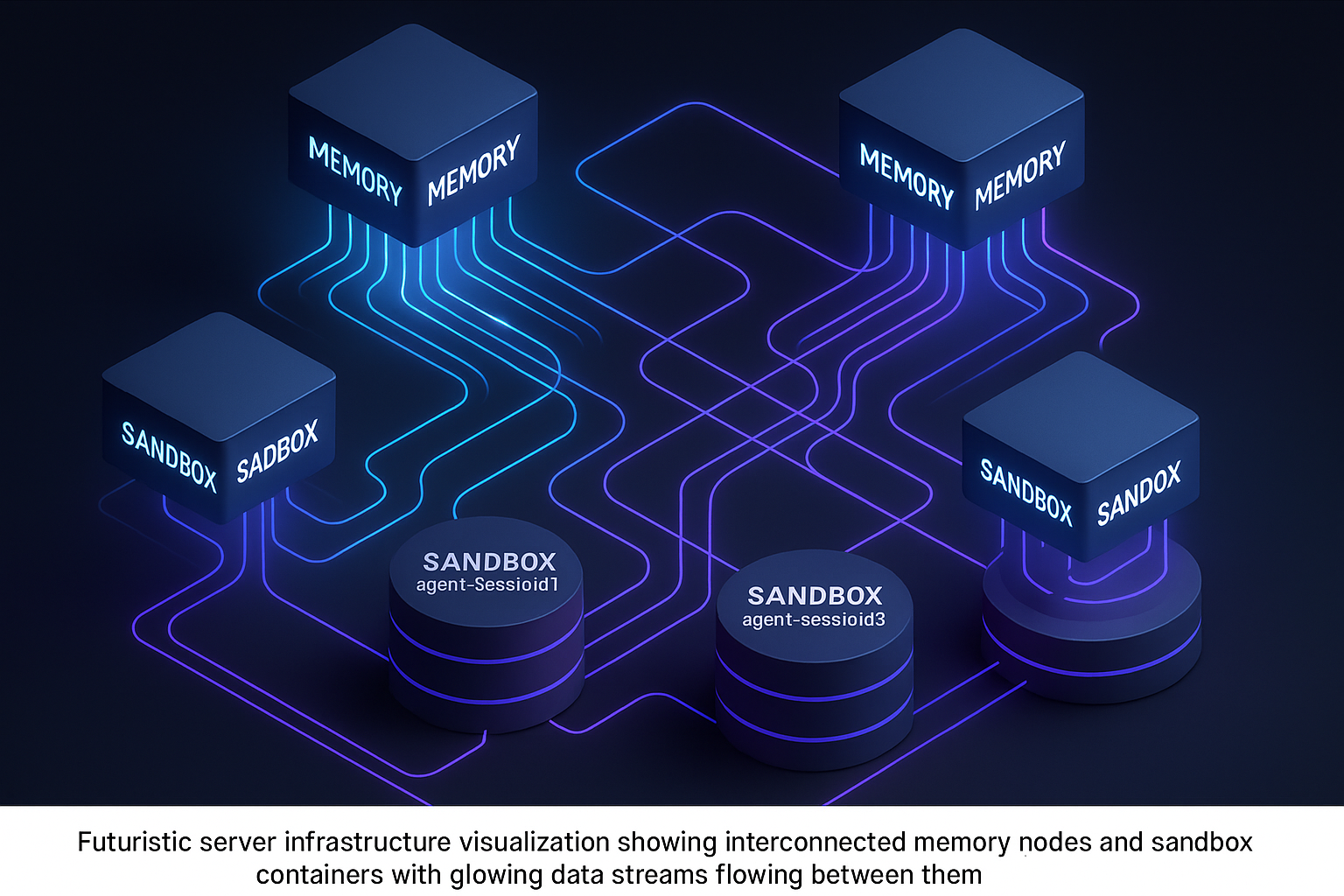
A sandbox in the agent context is the isolated execution environment where your agent runs code, executes shell commands, manipulates files, and interacts with external systems. The classic approach spins up a fresh container per task. Cheap. Simple. Completely broken for anything non-trivial.
A persistent sandbox maintains state across invocations:
- Filesystem state survives between agent calls
- Installed packages and environment configurations persist
- Running processes can be paused and resumed
- The agent can return to an in-progress task without starting from scratch
Think of it as the difference between giving a developer a new laptop every morning versus letting them keep their machine, their terminal sessions, and their work-in-progress. The productivity difference is not marginal — it's categorical.
The Three Memory Layers You Need
Agent memory is not one thing. Conflating the layers is the most common architectural mistake I see. You need three distinct layers working together:
1. Working Memory (In-Context)
This is the current conversation history, tool call results, and immediate task state inside the LLM's context window. It's fast and directly accessible but expensive and bounded. Treat it like RAM — fast, finite, volatile.
2. Episodic Memory (Vector Store)
Past interactions, task outcomes, observations, and learned facts stored as embeddings in a vector database. Retrieval-augmented at query time. This is how your agent "remembers" that a specific API endpoint returned a 429 last Tuesday, or that the user prefers responses in a particular format. If you're not already comfortable with semantic search and embeddings, read this primer on semantic search under 100 lines first.
3. Procedural Memory (Tool & Skill Store)
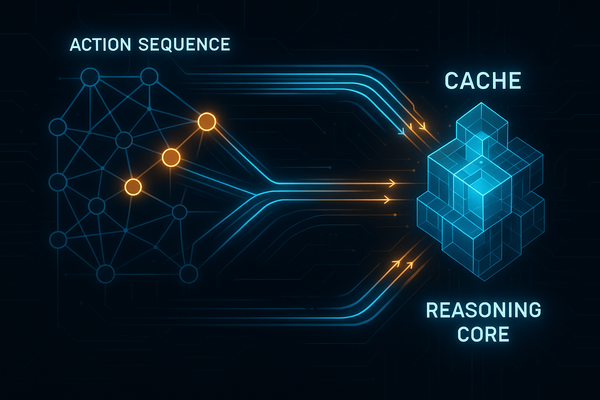
Stored workflows, successful tool-calling sequences, and agent "skills" that worked in the past. This is how you avoid re-discovering the same solution to the same problem on every invocation. This layer connects directly to how you structure tool calling in agentic workflows.
Reference Architecture
Here's the architecture I recommend for production agents that need persistent memory and sandbox state:
┌─────────────────────────────────────────────────────┐
│                   Agent Orchestrator                │
│  (Task planning, tool routing, memory management)   │
└────────────┬────────────────────────┬───────────────┘
             │                        │
    ┌────────▼────────┐    ┌──────────▼──────────┐
    │  Persistent     │    │   Memory Store       │
    │  Sandbox        │    │                      │
    │  (E2B/Modal)    │    │  ┌────────────────┐  │
    │                 │    │  │ Vector DB      │  │
    │  - Filesystem   │    │  │ (episodic)     │  │
    │  - Processes    │    │  └────────────────┘  │
    │  - Network      │    │  ┌────────────────┐  │
    │  - Package env  │    │  │ KV Store       │  │
    └─────────────────┘    │  │ (working state)│  │
                           │  └────────────────┘  │
                           │  ┌────────────────┐  │
                           │  │ Object Store   │  │
                           │  │ (artifacts)    │  │
                           │  └────────────────┘  │
                           └─────────────────────┘
Concrete Implementation: Memory Manager
Stop theorizing. Here's a working memory manager that handles the episodic layer with retrieval and storage. This is the core pattern you need:
import json
import hashlib
from datetime import datetime
from typing import Optional
from openai import OpenAI
import chromadb

class AgentMemoryManager:
    """
    Persistent episodic memory for AI agents.
    Stores observations, task outcomes, and learned context.
    Retrieves relevant memories at query time.
    """

    def __init__(self, agent_id: str, collection_name: str = "agent_memory"):
        self.agent_id = agent_id
        self.client = OpenAI()
        self.chroma = chromadb.PersistentClient(path=f"./memory/{agent_id}")
        self.collection = self.chroma.get_or_create_collection(
            name=collection_name,
            metadata={"hnsw:space": "cosine"}
        )

    def _embed(self, text: str) -> list[float]:
        response = self.client.embeddings.create(
            model="text-embedding-3-small",
            input=text
        )
        return response.data[0].embedding

    def store(self, observation: str, metadata: Optional[dict] = None) -> str:
        """Store an observation or task outcome in persistent memory."""
        memory_id = hashlib.sha256(
            f"{self.agent_id}{observation}{datetime.utcnow().isoformat()}".encode()
        ).hexdigest()[:16]

        base_metadata = {
            "agent_id": self.agent_id,
            "timestamp": datetime.utcnow().isoformat(),
            "type": "observation"
        }
        if metadata:
            base_metadata.update(metadata)

        self.collection.add(
            ids=[memory_id],
            embeddings=[self._embed(observation)],
            documents=[observation],
            metadatas=[base_metadata]
        )
        return memory_id

    def retrieve(self, query: str, n_results: int = 5,
                 memory_type: Optional[str] = None) -> list[dict]:
        """Retrieve relevant memories for the current task context."""
        where_filter = {"agent_id": self.agent_id}
        if memory_type:
            where_filter["type"] = memory_type

        results = self.collection.query(
            query_embeddings=[self._embed(query)],
            n_results=n_results,
            where=where_filter,
            include=["documents", "metadatas", "distances"]
        )

        memories = []
        for doc, meta, dist in zip(
            results["documents"][0],
            results["metadatas"][0],
            results["distances"][0]
        ):
            memories.append({
                "content": doc,
                "metadata": meta,
                "relevance_score": 1 - dist  # cosine similarity
            })
        return memories

    def format_for_context(self, query: str, max_memories: int = 3) -> str:
        """Format retrieved memories for injection into agent context."""
        memories = self.retrieve(query, n_results=max_memories)
        if not memories:
            return ""

        formatted = ["## Relevant Past Experience\
"]
        for i, mem in enumerate(memories, 1):
            score = mem['relevance_score']
            ts = mem['metadata'].get('timestamp', 'unknown')
            formatted.append(
                f"{i}. [{score:.2f} relevance | {ts[:10]}] {mem['content']}"
            )
        return "\
".join(formatted)


# Usage example
if __name__ == "__main__":
    memory = AgentMemoryManager(agent_id="coding-agent-01")

    # Store outcomes from past tasks
    memory.store(
        "Successfully refactored auth module using JWT. "
        "Required installing PyJWT>=2.8.0. Tests passed.",
        metadata={"type": "task_outcome", "task": "auth_refactor"}
    )

    memory.store(
        "GitHub API rate limit hit at 5000 req/hr. "
        "Implemented exponential backoff with jitter to resolve.",
        metadata={"type": "error_resolution", "api": "github"}
    )

    # At next task invocation, retrieve relevant context
    context = memory.format_for_context(
        query="Need to add authentication to the API"
    )
    print(context)
    # Injects relevant past experience into the agent's system prompt
Sandbox Persistence: The Missing Piece
Memory alone isn't enough. Your agent also needs a sandbox that survives between invocations. Here's the pattern using E2B's persistent sandboxes — one of the cleanest APIs currently available for this:
from e2b import Sandbox
import json

class PersistentAgentSandbox:
    """
    Manages a persistent sandbox for an agent session.
    Sandbox state (filesystem, processes, env) survives
    between agent invocations for the session lifetime.
    """

    SANDBOX_TIMEOUT = 3600  # 1 hour idle timeout

    def __init__(self, session_id: str):
        self.session_id = session_id
        self.sandbox_id_key = f"sandbox:{session_id}"
        self._sandbox = None

    def get_or_create(self, state_store: dict) -> Sandbox:
        """Resume existing sandbox or create new one."""
        existing_id = state_store.get(self.sandbox_id_key)

        if existing_id:
            try:
                # Attempt to reconnect to existing sandbox
                self._sandbox = Sandbox.reconnect(
                    sandbox_id=existing_id,
                    timeout=self.SANDBOX_TIMEOUT
                )
                print(f"Resumed sandbox: {existing_id}")
                return self._sandbox
            except Exception as e:
                print(f"Could not resume sandbox {existing_id}: {e}")
                print("Creating new sandbox...")

        # Create fresh sandbox with persistent template
        self._sandbox = Sandbox(
            template="python-data-analysis",
            timeout=self.SANDBOX_TIMEOUT
        )
        # Persist the sandbox ID for future reconnection
        state_store[self.sandbox_id_key] = self._sandbox.id
        print(f"Created new sandbox: {self._sandbox.id}")
        return self._sandbox

    def checkpoint_state(self, state_store: dict) -> dict:
        """Capture key filesystem state for recovery."""
        if not self._sandbox:
            return {}

        # List important files for state snapshot
        result = self._sandbox.process.start_and_wait(
            "find /home/user/workspace -name '*.py' "
            "-newer /tmp/last_checkpoint 2>/dev/null | head -20"
        )
        changed_files = result.stdout.strip().split('\
') if result.stdout else []

        checkpoint = {
            "sandbox_id": self._sandbox.id,
            "session_id": self.session_id,
            "changed_files": changed_files,
            "timestamp": datetime.utcnow().isoformat()
        }
        # Update checkpoint marker
        self._sandbox.filesystem.write("/tmp/last_checkpoint", "")
        return checkpoint
What to Do This Week
Here's your action plan, in priority order:
- Audit your current agent architecture. How much state is living exclusively in the context window? If the answer is "most of it," you have a fragility problem that will bite you at scale.
- Implement the three-layer memory model. Start with a simple ChromaDB or Pinecone episodic store. Even a minimal implementation dramatically improves agent performance on repeated task types.
- Evaluate persistent sandbox providers. E2B, Modal, and Daytona are the current front-runners. Your choice depends on whether you need code execution focus (E2B), general compute (Modal), or dev environment fidelity (Daytona).
- Build memory into your orchestration layer. Memory retrieval and storage should be automatic, not something individual agents have to manage. If you're running multi-agent systems, this connects directly to orchestration patterns and how state flows between agents.
- Add memory compression. Raw episodic storage grows unbounded. Implement periodic summarization — use an LLM to compress older memories into higher-level abstractions while preserving key facts.
The Production Reality Check
I've seen this pattern repeatedly when teams bring agents to production: they solve the model quality problem, they solve the tool integration problem, and then they hit a wall because the infrastructure doesn't support the continuity that real tasks require. This is exactly the kind of gap covered in production deployment lessons from the field.
The teams winning right now are treating persistent sandboxes and memory as infrastructure primitives — as fundamental as a database or a message queue. They're not asking "do we need memory?" They're asking "which memory architecture fits this agent's task profile?"
The stateless agent is a prototype artifact. The persistent, memory-augmented agent running in a stable sandbox environment is what production looks like. If you're building autonomous agents for enterprise automation, this infrastructure layer isn't optional — it's what separates pilots from deployments.
Get the infrastructure right. The rest becomes dramatically easier.